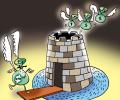
As the Indian currency hovers around its lowest versus the US greenback, several smaller and mid-sized companies are expected to face rough weather as almost 44 per cent of the foreign loans taken by Indian companies remained unhedged. According to the data sourced from the Reserve Bank of India, Indian companies raised around $38.2 billion in the financial year ended in March. Of this, only 56 per cent of the loans are hedged while the rest of the foreign loans remain unhedged, thus risking the companies to forex volatility.
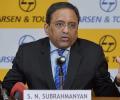
Engineering giant Larsen & Toubro (L&T) handed out a pay cheque of Rs 61.27 crore to its chief executive officer (CEO) and managing director (MD) SN Subrahmanyan in the last financial year (FY22), which is a near 115 per cent hike over FY21, as executive compensation at India Inc comes under sharp focus after two years of Covid-19. In fact, the total compensation of L&T's executive directors (including Subrahmanyan) in FY22 was 120 to 670 times the median remuneration of the company's employees, data from its FY22 annual report shows. This points to sharp hikes that the top management saw in their remuneration during the period, experts in human resources said. In FY21, L&T's executive compensation was 56 to 337 times the median remuneration of company employees.

'The second half of 2022 definitely looks stronger for Bollywood.'

Initial public offerings (IPOs) have attracted droves of retail investors to the stock market in CY22. But these applicants have lost money on 40 per cent of the fresh issues this year - a trend that may impact sentiment towards maiden share sales during the remaining part of the year. Of the 14 companies that have listed this year, five have closed below their issue price.

'A soft landing of the Indian economy would be a long-term positive for the equity markets.'

Engineering giant Larsen & Toubro (L&T) is looking to divest its exposure to road and power concessions and incubate digital and e-commerce businesses as part of its new five-year plan ending 2025-26 (FY26). The base year for the plan is 2020-21 (FY21). The blueprint, called Lakshya 2026, is intended to help the company exit sub-scale businesses, concentrate on high-technology (tech) manufacturing, construction and green energy projects, and increase its share from information technology (IT) and digital services. The lending operations of the financial services business, meanwhile, will be reorganised, with focus on retail lending.

Power generating companies (gencos) that use imported coal to produce electricity, may find it difficult to switch on their idle units immediately in the wake of high fuel costs, several players have told Business Standard. Recently, the Union power ministry had invoked Section 11 of the Electricity Act mandating all imported coal-based plants to generate power at full capacity. However, some generating companies that use imported coal, argue that it is simply unviable for them to produce power when the price of coal in the international market is high, while the per-unit price of power has been capped at Rs 12 per unit on the domestic power exchange.

LIC's $2.7-billion initial public offering (IPO) shall be the fifth-biggest globally in CY22. South Korean EV battery maker LG Energy Solution holds the record for the year's largest IPO at $10.8 billion, while Chinese mobile communications provider China Mobile IPO, which raised $8.6 billion, comes second. Dubai Electricity and Water Authority's (DEWA's) $6.1-billion IPO in March is currently the third biggest public offering for the year, followed by China National Offshore Oil Corporation's (CNOOC's) IPO; the firm had raised $5.1 billion by issuing shares in Mainland China after delisting from the American bourses.

'A good pipeline of movies is fuelling this trend of revenge consumption.'

The number of draft red herring prospectuses (DRHPs) filed with the markets regulator - Securities and Exchange Board of India (Sebi) - jumped nearly fivefold to 145 in 2021-22 (FY22), compared with just 30 in the preceding financial year (2020-21, or FY21). This was on account of companies rushing to take advantage of a favourable market sentiment towards initial public offerings (IPOs), triggered by an influx of new investors, surge in the secondary market, and encouraging performance of newly listed stocks. In fact, DRHPs filed in FY22 was 4x the previous 10-year average and the highest since 2007-08, according to primary market tracker PRIME Database.
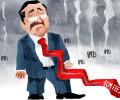
Experts say companies wanting to launch IPOs will have to scale back their expectations given the fall in valuations.
Once stability returns to the secondary market, companies that have obtained approval from Sebi will start tapping the market.

Year 2021 was another great year for fund-raising through equities. A total of Rs 1.8 trillion was raised through initial public offerings (IPOs), qualified institutional placements (QIPs), and rights issues, against the Rs 1.7 trillion raised in the previous year. Funds raised through IPOs quadrupled, while those from rights issues and QIPs reduced.
The expected interest rate hike in the US and the resultant volatility in the domestic secondary market could play a dampener to the over Rs 2-trillion initial public offering (IPO) pipeline in 2022. IPOs in 2022 look promising, with as many as 35 companies holding the Securities and Exchange Board of India's approval to raise roughly Rs 50,000 crore. Another 33 companies are waiting for the regulator's nod to raise around Rs 60,000 crore next year.

A total of 49 companies raised Rs 81,615 crore in Samvat 2077, more than the preceding four years and almost double the amount raised in the previous year. Samvat 2078 appears even more promising with mega issues of Paytm and Life Insurance Corporation (LIC) of India. However, Paytm's record could be short-lived as state-owned LIC is planning to launch a Rs 1-trillion IPO by March 2022.
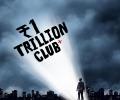
The Adani group has the maximum number of companies in the trillion club at five, followed by the Tata group (four).

Domestic mutual funds (MFs) and foreign portfolio investors (FPIs) have been net buyers of stocks in August. Domestic fund houses have continued to invest in stocks, propelled by the success of various new fund offers (NFOs) and strong flows into equity funds. MFs had purchased stocks worth more than Rs 8,300 crore until August 23, according to the data provided on the Securities and Exchange Board of India (Sebi) website. Jimmy Patel, MD and CEO at Quantum AMC, says: "The surge in equity investments by MFs is because of two key reasons. One, equity NFOs are getting a strong response from investors, and fund houses need to deploy that money in the markets.
At least five companies looking to raise a cumulative Rs 6,595 crore could launch their initial public offerings (IPOs) next month after a busy August that saw eight IPOs. On Thursday, south-based diagnostic chain Vijaya Diagnostics announced its plans for a Rs 1,895-crore IPO. Ami Organics will announce its plans for a Rs 600-crore issue on Friday.

The relentless rally in small- and mid-cap stocks continues as large-caps show signs of fatigue. In July, the Nifty Smallcap 100 rose 8.1 per cent, extending its year-to-date (YTD) gains to 48.5 per cent, while the Nifty Midcap 100 added 3.1 per cent, taking its YTD rise to 33.5 per cent. On the other hand, the Nifty50 remained unchanged for the month, with YTD gains of 12.7 per cent.
Retail investors-those investing up to Rs 200,000-lapped up all the four initial public offerings (IPOs) that opened for subscription on Wednesday. This is the first time since 2007 that four IPOs have been launched on a single day, according to information provided by Prime Database. KFC and Pizza Hut franchisee Devyani International (size Rs 1,838 crore); Diagnostic chains Krsnaa Diagnostics (Rs 1,213 crore), pharmaceutical firm Windlas Biotech (Rs 401 crore) and vitrified tiles manufacturer Exxaro Tiles (Rs 161 crore) are the four companies whose IPOs opened on Wednesday.
 © 2026 Rediff.com - Investor Information - Advertise with us - Disclaimer - Privacy Policy - Sitemap - Feedback - About us - Terms of use - Grievances